Common Payroll & HR Data Entry Mistakes (and How to Prevent Them)
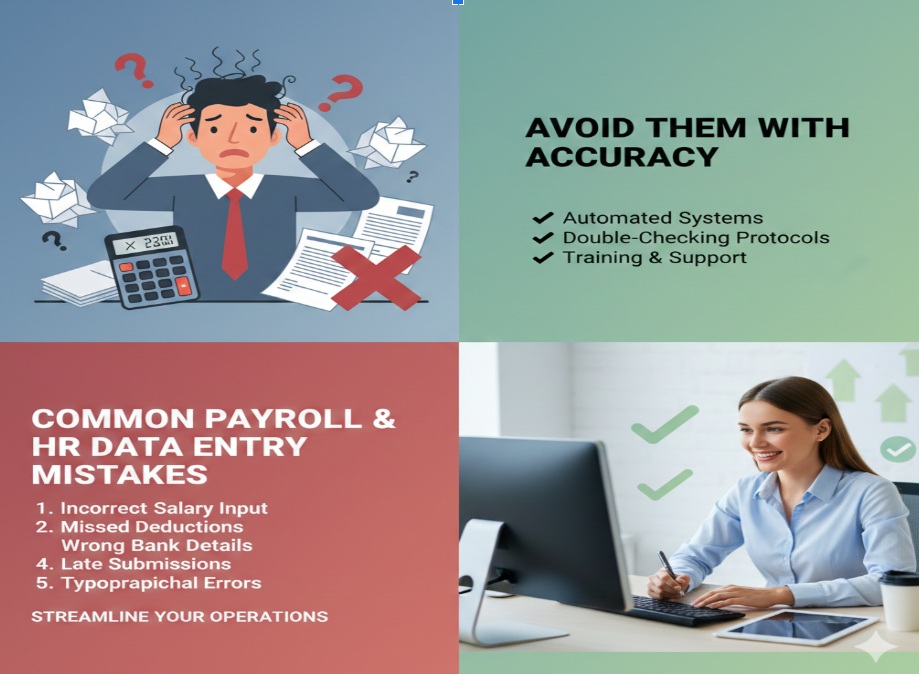
Payroll and HR data entry are crucial processes for every organization, yet they are highly prone to human error. Mistakes in these areas can lead to financial losses, compliance issues, and decreased employee satisfaction. Understanding common pitfalls and learning how to prevent them can save organizations time, money, and unnecessary stress. Even small mistakes—such as entering incorrect employee details, miscalculating hours, or overlooking statutory deductions—can lead to payroll delays, compliance issues, financial losses, and employee dissatisfaction. As organisations grow and manage diverse workforces, the risk of data entry errors increases, especially when relying on manual processes or outdated systems.
Common mistakes often stem from inconsistent data formats, lack of verification, poor record-keeping, or inadequate training. In today’s digital workplace, these errors not only consume time and resources but can also affect morale, trust, and overall productivity. Understanding the most frequent payroll and HR data entry mistakes is the first step toward implementing better controls, improving accuracy, and safeguarding your business from avoidable complications. This guide outlines the key errors and how to prevent them effectively.
Common Payroll and HR Data Entry Mistakes
1. Typographical Errors in Employee Information
One of the most common payroll mistakes is simple typos in employee data. This could include misspelled names, incorrect Social Security numbers, wrong addresses, or inaccurate banking details.
Consequences:
- Delays in salary payments
- Tax filing errors
- Employee dissatisfaction
- Legal issues in severe cases
Prevention Tips:
- Use digital forms with validation rules. For example, ensure Social Security numbers follow the correct format.
- Double-check entries using automated tools or HR software.
- Implement a second-person verification system for critical data fields.
2. Incorrect Salary or Wage Data
Payroll calculations often go wrong due to wrong hourly rates, salary structures, or bonus entries. Even small errors can compound over multiple pay periods, causing major discrepancies.
Consequences:
- Overpayment or underpayment of employees
- Budget mismanagement
- Employee frustration and reduced trust
Prevention Tips:
- Standardize salary entry formats and include clear pay scales.
- Automate payroll calculations using software that minimizes manual input.
- Conduct regular audits to catch errors early.

3. Misclassification of Employees
Classifying employees incorrectly as full-time, part-time, contractor, or intern can lead to serious compliance and tax issues. Misclassification affects benefits, tax withholdings, and labor law adherence.
Consequences:
- Penalties from labor and tax authorities
- Disputes over benefits or overtime pay
- Legal liabilities
Prevention Tips:
- Maintain clear employee classification guidelines.
- Train HR staff on labor law and tax compliance rules.
- Regularly review employee classifications, especially after promotions or role changes.
4. Failing to Update Records
HR and payroll data is dynamic. Employees change roles, addresses, banking details, or tax withholding preferences. Failure to update these changes promptly can result in incorrect paychecks or benefits.
Consequences:
- Payroll errors
- Miscommunication with employees
- Compliance risks with tax authorities
Prevention Tips:
- Implement an employee self-service portal to allow updates.
- Schedule periodic audits of employee records.
- Set automated reminders for HR staff to review and update data.
5. Neglecting Tax Deductions and Benefits
Incorrect or missing tax deductions, health insurance contributions, or retirement plan contributions are frequent mistakes in payroll processing.
Consequences:
- Fines and penalties from tax authorities
- Employee dissatisfaction
- Complications during annual tax filings
Prevention Tips:
- Use integrated payroll software that automatically calculates tax deductions.
- Keep abreast of federal, state, and local tax laws.
- Conduct training sessions for payroll staff on compliance and benefits management.
6. Manual Data Entry Without Verification
Relying entirely on manual input without cross-verification increases the risk of mistakes. Human errors are inevitable, especially when handling large datasets.
Consequences:
- Misreported hours worked or overtime
- Duplicate payments
- Incorrect benefits administration
Prevention Tips:
- Employ double-entry verification for critical fields.
- Use scanning or OCR software to digitize paper forms accurately.
- Integrate HR and payroll systems to reduce manual data transfer.
7. Overlooking Overtime and Leave Records
Incorrectly recording hours, overtime, or leave can cause payroll discrepancies. This is particularly common in organizations without automated attendance tracking.
Consequences:
- Employees may be underpaid or overpaid
- Legal disputes over labor law violations
- Payroll reconciliation becomes time-consuming
Prevention Tips:
- Use automated time-tracking systems.
- Implement clear leave policies and approval workflows.
- Regularly reconcile timesheets with payroll data.
8. Lack of Proper Documentation
Payroll and HR errors often arise when there is no proper documentation for employee agreements, bonuses, or reimbursements. Without documentation, errors can go unnoticed.
Consequences:
- Difficulty resolving payroll disputes
- Potential compliance violations
- Loss of organizational credibility
Prevention Tips:
- Maintain digital records of all employee agreements, approvals, and pay adjustments.
- Implement a document management system with audit trails.
- Ensure all HR and payroll changes are backed by proper approvals.
9. Inadequate Training of HR Staff
Even the best systems can fail if HR staff are not adequately trained. Misunderstandings about policies, software, or legal requirements lead to data entry mistakes.
Consequences:
- Systematic errors affecting multiple employees
- Increased HR workload due to corrections
- Potential fines and legal issues
Prevention Tips:
- Provide regular training on payroll software, labor law, and compliance.
- Create detailed process manuals for HR and payroll tasks.
- Encourage cross-training among team members to avoid single points of failure.
10. Ignoring Audit Trails and Reports
Failing to review payroll reports and audit trails prevents organizations from catching errors early. Payroll audits are essential for maintaining accuracy and compliance.
Consequences:
- Errors accumulate unnoticed
- Difficulties during internal or external audits
- Financial and reputational damage
Prevention Tips:
- Schedule regular payroll audits.
- Use HR software that generates detailed audit logs.
- Review discrepancies immediately and implement corrective actions.
FAQs on Payroll & HR Data Entry Mistakes
Q1: How often should payroll data be audited?
A: Payroll data should ideally be audited every pay cycle. Additionally, quarterly or annual audits help ensure compliance with tax and labor regulations.
Q2: Can software completely eliminate payroll errors?
A: While payroll software significantly reduces errors, human oversight is still necessary for data verification and handling exceptions like bonuses or leave adjustments.
Q3: What is the most common payroll data entry mistake?
A: Typographical errors in employee information and incorrect salary data are among the most frequent mistakes. These can have cascading effects on payroll processing.
Q4: How can employee self-service portals help prevent mistakes?
A: They allow employees to update personal details, bank accounts, and tax preferences directly, reducing the burden on HR and minimizing errors.
Q5: Are there legal consequences for payroll mistakes?
A: Yes. Errors in wage payments, tax deductions, or employee classification can lead to penalties, fines, or legal disputes. Accurate payroll management is crucial for compliance.
Q6: How can small businesses prevent payroll errors without investing heavily in software?
A: Small businesses can prevent errors by implementing double-check procedures, maintaining clear records, providing staff training, and using affordable payroll tools or cloud-based software.
Conclusion
Payroll and HR data entry errors are common but avoidable. Organizations can prevent mistakes by combining technology, standardized processes, regular audits, and staff training. Accuracy in payroll not only ensures compliance but also strengthens employee trust and satisfaction. By proactively addressing common pitfalls, companies can save time, reduce costs, and maintain a smooth HR and payroll workflow.