How Poor Candidate Experience Damages Your Employer Brand

In the present hyperactive and highly competitive job market, candidate experience has become a strong key point of employer brand reputation. Candidates looking for a job do not just silently watch and take part in the hiring process, but they straightforwardly share their experiences on social media, provide feedback on review platforms, and on professional networks. Every point of communication, from reading a job description to getting a final response, frames how a candidate thinks about an organization.
When a candidate doesn’t receive a good experience, the impact extends far beyond a single rejection. Your technique of poor interaction, unorganized interviews, or a missing feedback loop can quickly damage trust and credibility.
Over time, these experiences form a public narrative about what it’s like to work at your company. This narrative influences whether top talent applies, accepts offers, or recommends your organization to others. In an era where employer reputation is built as much by candidates as by employees, delivering a thoughtful and respectful candidate experience is no longer optional; it’s essential.
What Is Candidate Experience?
Candidate experience refers to how job seekers perceive and feel about your company throughout the recruitment and hiring process. It includes every touch point, such as:
- Job descriptions and career pages
- Application process and technology
- Communication with recruiters
- Interviews and assessments
- Feedback and closure
Importantly, candidate experience applies to all candidates, not just those you hire. Rejected applicants make up the vast majority of people interacting with your recruitment process—and their opinions matter just as much.
Understanding Employer Brand

Your employer brand is your reputation as a place to work. It reflects what current employees, former employees, candidates, and the wider market believe about your culture, leadership, values, and work environment.
Unlike recruitment marketing campaigns, employer brand is not something you fully control. It is built over time through consistent behavior and experiences. Candidate experience plays a critical role because, for many people, the hiring process is their first real interaction with your organization.
When that experience is negative, candidates often assume the internal culture is worse.
What Does a Poor Candidate Experience Look Like?
Poor candidate experience rarely comes from a single major failure. More often, it’s the accumulation of small frustrations that signal disrespect or disorganization.
Common examples include:
|
Lack of communication: |
Candidates apply and never hear back, or are left waiting weeks without updates. |
|
Unclear job descriptions: |
Roles that don’t match actual responsibilities or expectations. |
|
Overly long or complex application processes: |
Requiring excessive forms, duplicate data entry, or unnecessary assessments. |
|
Unprepared or dismissive interviewers: |
Interviewers who arrive late, haven’t read the resume, or ask irrelevant questions. |
|
No feedback after interviews: |
Silence after candidates invest time and effort into interviews. |
These issues may seem minor internally, but to candidates they feel personal. They communicate a simple message: your time and effort don’t matter to us.
How Poor Candidate Experience Directly Damages Employer Brand?
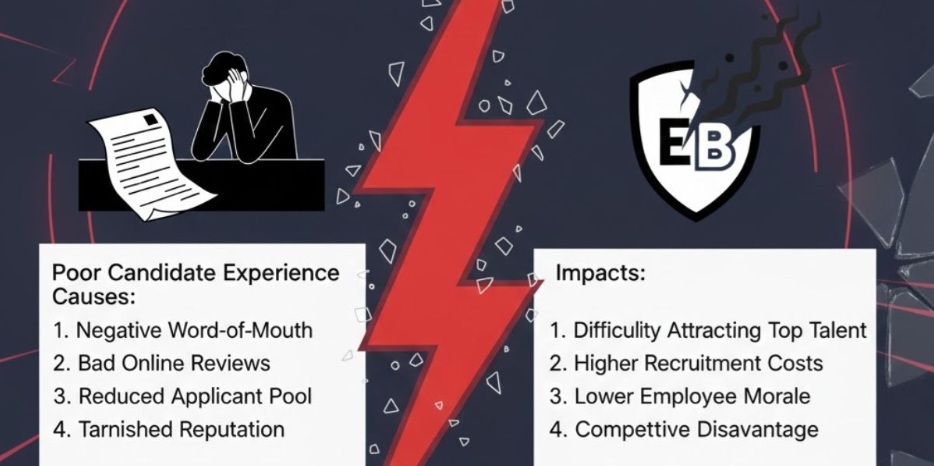
1. Negative Reviews Spread Quickly
Candidates today openly share their experiences on platforms like Glassdoor, Indeed, LinkedIn, Reddit, and personal blogs. One negative experience can reach thousands of potential candidates within days.
When poor experiences become a pattern, they create a public narrative that your company is disorganized, uncaring, or unprofessional. Even strong marketing campaigns struggle to counteract authentic negative reviews from real candidates.
2. Word of Mouth Carries More Weight Than Ads
People trust people more than brands. Candidates talk to friends, classmates, colleagues, and professional networks about their interview experiences. A single bad experience can discourage multiple qualified individuals from ever applying.
This informal reputation is often invisible to HR teams—but it’s incredibly powerful.
3. Loss of Trust and Credibility
A poor candidate experience damages trust before employment even begins. Candidates may question leadership quality, internal communication, and company values. Even if they receive an offer, doubts created during the process can lead to declined offers or early attrition.
The Business Impact Goes Beyond Reputation
Employer brand damage has measurable business consequences.
Smaller and Weaker Talent Pipelines
When candidates associate your brand with poor experiences, fewer people apply. Over time, this reduces both the volume and quality of applicants, forcing recruiters to work harder for worse results.
Higher Cost-per-Hire
As organic applications decline, companies rely more heavily on paid job ads, agencies, and external recruiters. This increases hiring costs while still not guaranteeing better outcomes.
Longer Time-to-Fill Roles
A damaged employer brand slows hiring. Roles stay open longer, increasing workload pressure on teams and delaying business goals.
Candidates as Customers
Many candidates are also customers—or potential customers. Research consistently shows that people who have a negative hiring experience are less likely to buy from or recommend that company. For consumer-facing brands, poor candidate experience can directly impact revenue.
Candidate Experience Reflects Employee Experience
The hiring process is often a preview of what it’s like to work at a company. When interviews feel chaotic, communication is poor, or candidates feel disrespected, they assume those behaviors continue internally.
This connection has serious implications:
- Employees hired through poor processes may disengage faster
- Referral rates decline because employees hesitate to recommend the company
- Turnover increases when expectations set during hiring don’t match reality
In contrast, a respectful and transparent candidate experience builds goodwill—even among those not hired.
Warning Signs Your Employer Brand Is at Risk
Many organizations don’t realize they have a candidate experience problem until damage is already done. Common warning signs include:
- Declining application numbers despite similar job market conditions
- High interview no-show rates
- Increased offer rejections
- Negative or vague feedback from recruiters
- Poor ratings or recurring complaints on employer review sites
Ignoring these signals allows small problems to become systemic.
How to Improve Candidate Experience and Protect Your Employer Brand?
Improving candidate experience doesn’t require perfection—it requires intention and consistency.
Communicate Clearly and Often
Set expectations early. Let candidates know timelines, next steps, and outcomes—even when the answer is no. Silence is almost always interpreted negatively.
Respect Candidate Time
Streamline applications, avoid unnecessary interview rounds, and ensure interviews are purposeful. If a step doesn’t add value, remove it.
Train Hiring Managers
Interviewing is a skill. Equip hiring managers with training on structured interviews, bias awareness, and candidate communication. One poor interviewer can undo months of employer branding work.
Provide Closure and Feedback
While detailed feedback may not always be possible, timely closure is essential. A simple, respectful rejection message goes a long way in preserving goodwill.
Use Technology Thoughtfully
Automation can improve efficiency, but over-automation can feel impersonal. Balance technology with human touch points to maintain authenticity.
Measuring and Monitoring Candidate Experience
What isn’t measured rarely improves. Organizations should actively track candidate experience through:
- Post-interview or post-application surveys
- Candidate Net Promoter Score (cNPS)
- Review site monitoring and response strategies
- Regular feedback sessions with recruiters and hiring managers
Treat candidate feedback as valuable insight, not criticism.
Conclusion: Candidate Experience Is a Brand Strategy
Candidate experience is no longer just an HR concern—it’s a brand, reputation, and business issue. Every ignored application, delayed response, or unprepared interview chips away at your employer brand.
In a competitive talent market, companies that win are not always those with the highest salaries or most recognizable names. They are the ones that treat candidates with respect, communicate honestly, and design hiring processes that reflect their values.
By investing in better candidate experience today, you protect your employer brand tomorrow—and turn every candidate interaction into an opportunity, not a liability.
Frequently Asked Questions
Why is candidate experience important for employer branding?
Candidate experience directly shapes employer brand perception. Positive experiences build trust and credibility, while negative ones can harm reputation through reviews, word of mouth, and social media.
How does poor candidate experience affect a company?
Poor candidate experience can lead to negative employer reviews, reduced applicant quality, higher hiring costs, longer time-to-fill roles, and lower offer acceptance rates.
Can rejected candidates damage an employer brand?
Yes. Rejected candidates make up most applicants, and their experiences often influence public opinion more than hired employees, especially when shared online.
What are common signs of poor candidate experience?
Signs include lack of communication, unclear job roles, long hiring processes, unprepared interviewers, absence of feedback, and high interview no-show rates.
How does candidate experience impact customer perception?
Many candidates are also customers. A negative hiring experience can reduce brand loyalty and discourage candidates from purchasing or recommending the company’s products or services.
How can companies improve candidate experience?
Companies can improve candidate experience by communicating clearly, respecting candidates’ time, training hiring managers, providing timely updates, and using recruitment technology thoughtfully.