The Hidden Costs of Running HR Without Software
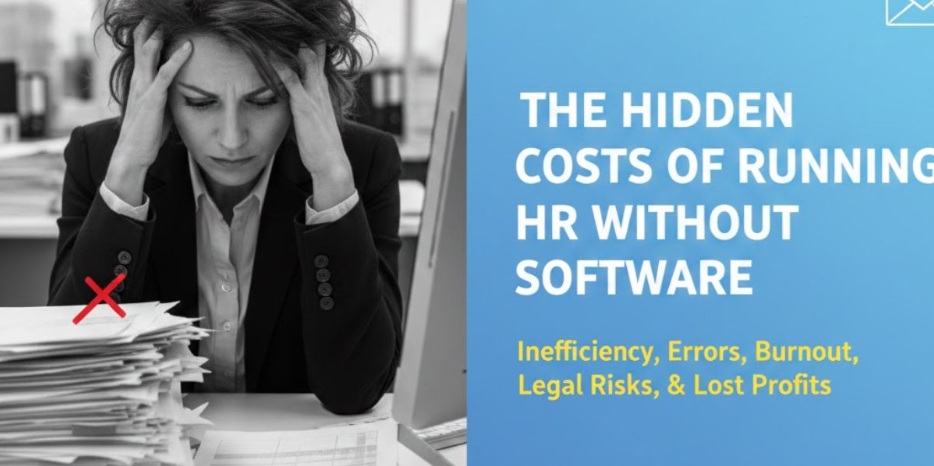
Running HR without a software temporarily felt like a practical choice, particularly in the early days. This was because spreadsheets were free of cost, emails were familiar, and paper files were used to get the job done or as it may seem so. What many companies don’t realize is that while HR may look too simple from the outside, it quietly creates costs that don’t show up on a balance sheet immediately.
Think about how much time is spent looking for approvals, manually updating employee records in different places, or answering the same HR questions over and over again. These situations might feel small but day after day, they pile up. Thus, pulling HR teams away from work that helps business move forward. Doing tasks manually increases the chances of mistakes thus slowing down employee support and it becomes stressful to stay compliant.
According to Forbes, about 80% of U.S. businesses use HR software, which implies that roughly 20% do not use dedicated HR software.
Moreover, Business.com suggests that among SMB leaders, 29% said they have no plans to adopt HR software in the coming years, while 58% were unsure.
The main challenge is that these costs get ignored easily as they are hidden in everyday routines. All of these slowly add up quietly until HR becomes reactive and stretched thin. In this blog, we will talk about the hidden costs of running HR without software and why what feels like a cost-effective approach may actually be costing your business far more than you think.
Why “Manual HR” Is More Expensive Than It Looks?
On the surface, not using HR software seems like a money-saving decision. There’s no subscription fee and no system to implement. However, manual HR doesn’t eliminate costs; rather, it shifts them into lost time, increased risk, and missed opportunities. These hidden costs compound over time and can quietly drain productivity, morale, and growth potential.
Time Inefficiencies That Add Up Quickly
Manual HR processes are time-intensive by nature. HR teams often spend hours each week on tasks such as:
- Entering and updating employee information
- Tracking attendance and leave in spreadsheets
- Managing onboarding paperwork
- Responding to routine employee questions
What seems manageable with a small team becomes overwhelming as headcount grows. Time spent on repetitive admin work is time not spent on strategic priorities like talent development, culture, or workforce planning.
Increased Risk of Errors
Human error is one of the biggest hidden costs of manual HR. Without automated checks and centralized records, mistakes become more common, including:
- Payroll miscalculations
- Incorrect leave balances
- Outdated or duplicated employee records
These errors often lead to rework, frustrated employees, and loss of trust in HR. In some cases, they can also result in financial losses or disputes that take significant time and effort to resolve.
Compliance and Legal Exposure

Staying compliant with labor laws, contracts, and internal policies is difficult without proper systems in place. Manual HR makes it harder to:
- Track changing regulations
- Maintain accurate documentation
- Produce audit trails when required
Missed deadlines, incomplete records, or incorrect classifications can expose organizations to fines, penalties, or legal challenges. Even if issues are resolved, the stress and resources required to manage them are a real cost.
Poor Employee Experience
Employees expect HR processes to be simple and transparent. Without software, HR often struggles to deliver:
- Fast responses to requests
- Consistent onboarding experiences
- Easy access to personal information or documents
When employees have to wait for answers or deal with unclear processes, frustration grows. Over time, this can impact engagement, morale, and retention—costs that are far more expensive than software fees.
Limited Data Visibility and Insights
Manual HR systems scatter data across emails, files, and spreadsheets. This makes it difficult to answer basic questions such as:
- Why are employees leaving?
- Which teams have high absenteeism?
- How fast is the company really growing?
Without reliable data and reporting, leadership decisions are often based on assumptions instead of insights. This lack of visibility limits HR’s ability to contribute strategically to the business.
Scaling Becomes Increasingly Difficult
Manual HR processes don’t scale well. Each new hire adds more complexity, more files, and more administrative work. As the organization grows, HR can quickly become a bottleneck instead of a support function.
HR software helps standardize workflows, automate repetitive tasks, and ensure consistency—making growth smoother and less costly.
The Hidden Financial Costs

When organizations compare manual HR to HR software, they often focus only on the subscription price. What’s frequently overlooked are costs such as:
- Hours of lost productivity every week
- Costs of fixing errors
- Employee turnover caused by poor experiences
- Compliance risks and potential penalties
When these factors are considered, manual HR often turns out to be the more expensive option in the long run.
When HR Software Becomes Essential?
Some clear signs it’s time to move away from manual HR include:
- HR teams feeling overwhelmed by admin work
- Frequent payroll or data errors
- Growing compliance complexity
- Increasing employee complaints about HR processes
At this stage, HR software isn’t a luxury—it’s a necessity for efficiency, accuracy, and sustainable growth.
Conclusion: The Most Expensive Choice Is Standing Still
Running HR without software may feel economical at first, but the hidden costs tell a different story. Time loss, errors, compliance risks, and poor employee experiences all quietly erode business performance.
Investing in HR software isn’t just about automation—it’s about protecting your organization from these hidden costs and enabling HR to become a true strategic partner.
FAQs on The Hidden Costs of Running HR Without Software
Is HR software only necessary for large companies?
No. Small and mid-sized businesses often benefit the most because they have limited HR resources. Software helps them operate efficiently without needing a large HR team.
Can spreadsheets handle HR needs effectively?
Spreadsheets can work temporarily, but they lack automation, error prevention, security, and scalability. As complexity increases, their limitations become costly.
What are the biggest risks of manual HR?
The biggest risks include payroll errors, compliance issues, data inaccuracies, and poor employee experiences, all of which can have financial and reputational consequences.
Is HR software expensive?
While HR software has a cost, it is often far less than the combined cost of lost productivity, errors, turnover, and compliance risks caused by manual processes.
How do I know when it’s time to switch to HR software?
If HR tasks consume excessive time, errors are frequent, compliance feels risky, or employees are dissatisfied with HR processes, it’s likely time to consider HR software.