Why Manual HR Processes Can’t Scale With Your Business
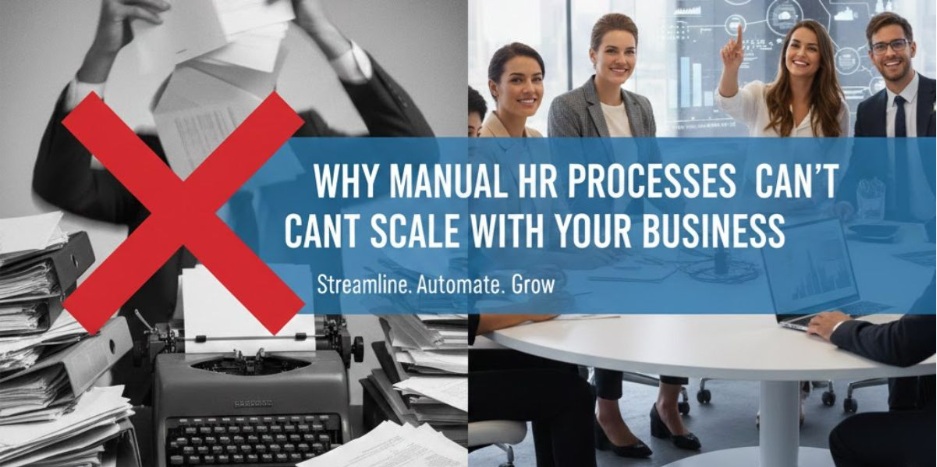
In the early stages of a business, manual HR processes often feel like the smartest choice. Spreadsheets, email threads, shared documents, and paper forms are inexpensive, familiar, and easy to set up. For a small team, these methods can work well enough to handle hiring, payroll, leave management, and employee records without much friction. However, growth changes everything. As your organization expands, so does the number of employees, compliance requirements, locations, and expectations. What once felt manageable quickly becomes chaotic.
Simple tasks take longer, mistakes become more common, and HR teams find themselves buried in administrative work rather than supporting business strategy. Employees notice delays, inconsistencies, and a lack of transparency, which can negatively affect morale and retention.
Scaling a business requires systems that are designed to grow with it. Manual HR processes were never built for complexity, speed, or scale. They rely heavily on human effort, tribal knowledge, and workarounds that break under pressure. As a result, they limit visibility, increase risk, and slow down decision-making. In this blog, we’ll explore why manual HR processes fail at scale and why investing in modern, automated HR systems is essential for sustainable growth.
What Manual HR Processes Really Look Like?
Manual HR processes typically involve disconnected tools and repetitive human intervention. Common examples include:
- Employee data tracked in spreadsheets
- Onboarding checklists managed through documents and emails
- Leave requests handled via email or messaging apps
- Payroll calculations are done manually or across multiple systems
- Performance reviews are stored as individual files
At a small scale, these methods feel flexible and personal. HR teams know every employee, and issues can be resolved informally. But as headcount grows, these processes become fragile. Information is duplicated, files are misplaced, and it becomes unclear which data source is accurate.
The lack of a single source of truth makes even basic HR tasks time-consuming and error-prone. What once felt simple becomes increasingly difficult to maintain.
Errors Multiply as Your Business Grows
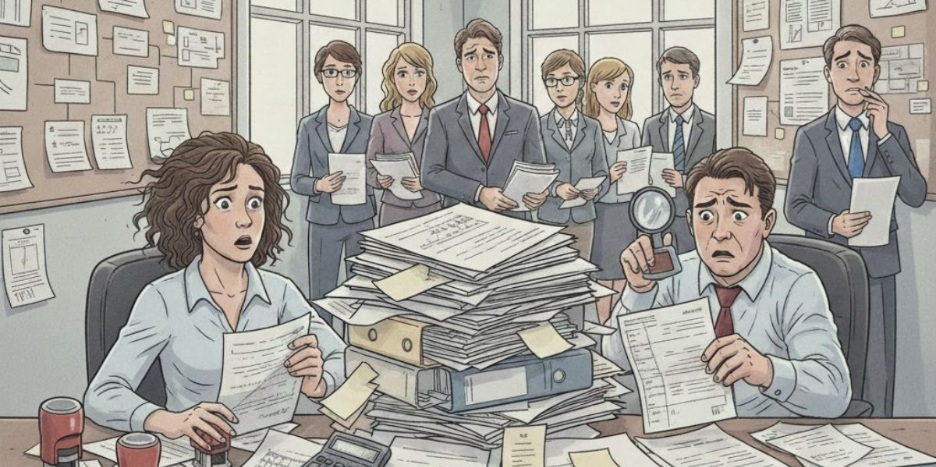
Manual data entry is one of the biggest risks in HR operations. Every time information is entered, copied, or updated by hand, there is potential for error. As the number of employees increases, so does the volume of data—and the likelihood of mistakes.
Common issues include incorrect payroll calculations, outdated employee records, missed benefit enrollments, and inaccurate leave balances. These errors don’t just create extra work for HR; they directly affect employees’ trust in the organization.
In addition, growing companies face more complex compliance requirements. Labor laws, tax regulations, and data protection rules vary by region and change frequently. Managing compliance manually makes it easy to miss deadlines or apply policies inconsistently, exposing the business to legal and financial risk.
Manual HR Drains Time From HR and Leadership
One of the highest hidden costs of manual HR processes is time. HR teams spend countless hours on repetitive administrative tasks such as updating spreadsheets, following up on approvals, correcting errors, and answering routine employee questions.
As a result, HR professionals have less time to focus on high-impact initiatives like talent development, employee engagement, workforce planning, and culture building. Instead of being strategic partners, they are stuck reacting to operational issues.
Managers and leaders are also affected. Inefficient HR processes slow down hiring, onboarding, and decision-making. Leaders spend time navigating approvals and resolving errors instead of focusing on growth and innovation.
Poor Employee Experience at Scale
Employee experience becomes increasingly important as organizations grow. Employees expect quick onboarding, accurate payroll, clear policies, and easy access to information. Manual HR processes often fail to meet these expectations.
New hires may experience inconsistent onboarding. Leave requests may take days to be approved. Employees may struggle to find answers to basic questions about benefits or policies. Over time, these small frustrations add up.
A poor HR experience can lead to disengagement, lower productivity, and higher turnover. In competitive talent markets, inefficient HR processes can even damage an employer’s reputation.
Lack of Visibility Limits Strategic Decision-Making
Growing businesses rely on data to make informed decisions. Leaders need real-time insights into headcount, turnover, performance, compensation, and workforce costs. Manual HR processes make it difficult to access accurate and up-to-date information.
When data is scattered across spreadsheets and documents, reporting becomes slow and unreliable. HR teams spend hours compiling reports, only for the data to be outdated by the time it’s ready. Without clear visibility, workforce planning becomes guesswork.
This lack of insight can lead to poor hiring decisions, misaligned budgets, and missed opportunities for growth.
Manual Processes Don’t Support Remote or Distributed Teams
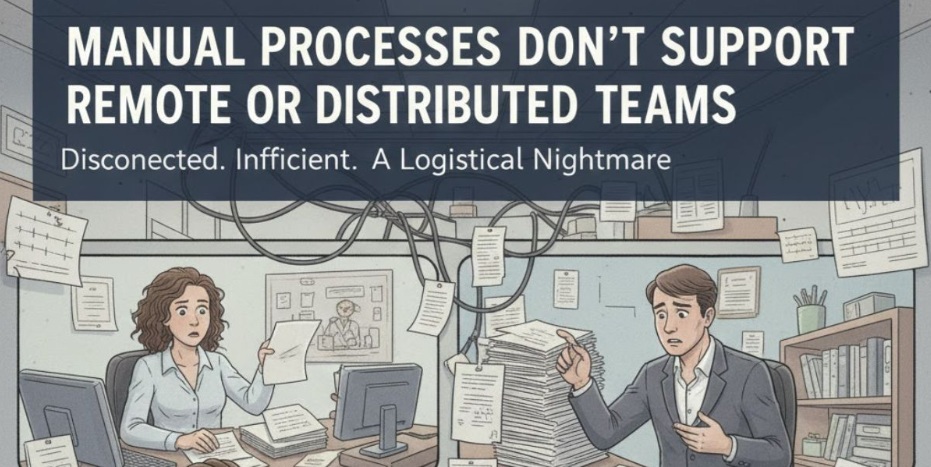
As more companies adopt remote or hybrid work models, centralized HR systems become even more critical. Manual processes struggle to support distributed teams across locations and time zones.
Without a centralized system, communication becomes fragmented and documentation inconsistent. Employees in different regions may receive different information or experience delays due to time zone differences.
Scalable HR systems provide a single platform where employees and managers can access information anytime, from anywhere—something manual processes simply cannot deliver.
Scaling Requires Standardization and Automation
Scalable organizations rely on standardized, repeatable workflows. Automation ensures that HR processes are consistent, accurate, and efficient, regardless of company size.
Automated HR systems centralize employee data, streamline onboarding, manage payroll and compliance, and provide real-time reporting. This allows HR teams to handle increased volume without a proportional increase in workload.
More importantly, automation frees HR to focus on strategic initiatives that drive business growth. Instead of managing paperwork, HR can support leadership with insights, planning, and employee development.
The True Cost of Delaying HR Modernization
Many businesses delay investing in HR technology to save costs. However, the long-term cost of manual processes is often much higher. Hidden costs include lost productivity, employee turnover, compliance penalties, and burnout within HR teams.
As competitors adopt modern HR systems, businesses that rely on manual processes risk falling behind. They struggle to attract talent, scale efficiently, and respond quickly to change.
Modernizing HR isn’t just an operational upgrade—it’s a strategic investment in the future of the business.
Conclusion: Build HR for Sustainable Growth
Manual HR processes may support early-stage operations, but they cannot sustain long-term growth. As businesses scale, complexity increases, and the limitations of manual systems become impossible to ignore.
Organizations that invest in scalable HR infrastructure gain accuracy, visibility, and efficiency. More importantly, they create a better experience for employees and enable HR to become a true strategic partner.
The question is no longer whether manual HR processes work today—but whether they will support the business you’re building for tomorrow.
Frequently Asked Questions
What are manual HR processes?
Manual HR processes are HR tasks managed through spreadsheets, emails, paper forms, and disconnected tools without automation or centralized systems.
Why do manual HR processes fail as companies grow?
They rely on human effort, increase errors, lack visibility, and cannot handle higher volumes of data, employees, and compliance requirements.
How do manual HR processes affect employees?
They cause delays, inconsistencies, payroll errors, and poor onboarding experiences, which can reduce engagement and trust.
Are manual HR processes risky from a compliance perspective?
Yes. Manual tracking makes it easier to miss regulatory changes, deadlines, and documentation requirements, increasing legal and financial risk.
When should a business move away from manual HR?
As soon as growth becomes consistent—typically when hiring accelerates, teams become distributed, or compliance requirements increase.
How does HR automation help with scalability?
Automation standardizes workflows, reduces errors, centralizes data, and provides real-time insights, allowing HR to scale efficiently.
Is HR technology only for large enterprises?
No. Many modern HR systems are designed for startups and SMBs, helping them scale without adding administrative overhead.